
The ready meal market has evolved from being an emergency option into a gourmet and convenience category. However, for a high-quality recipe to reach the consumer’s table in perfect condition, choosing the right film and packaging system is not a secondary detail: it is the key to success.
In this article, we break down the essential technical factors for choosing the packaging that best protects your product.
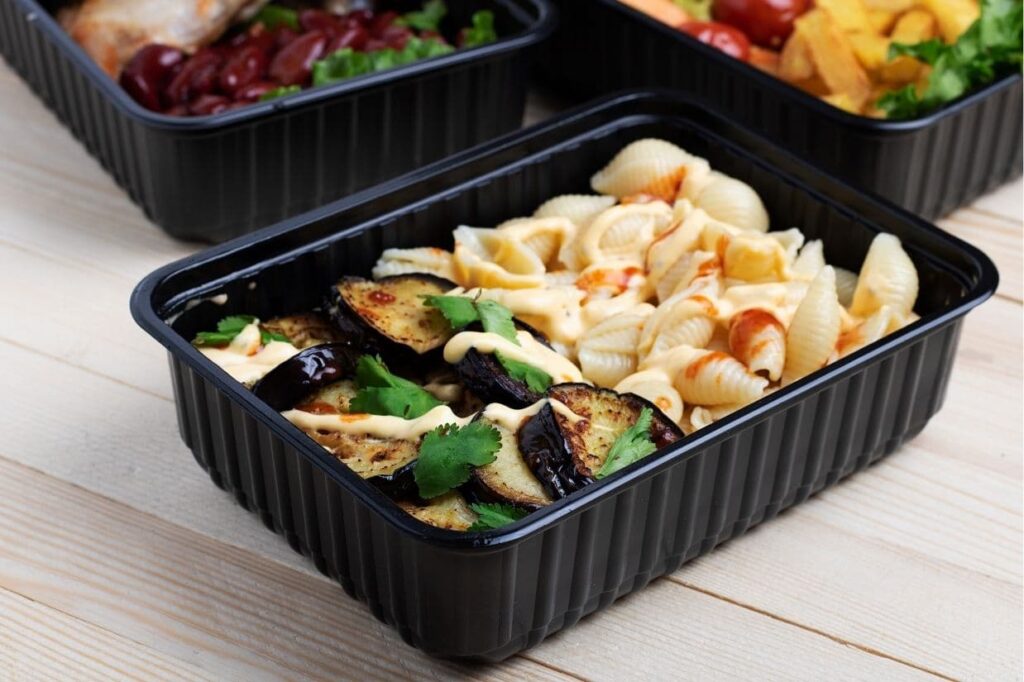
What exactly ere ready meals?
Ready meals are food products that have undergone a preparation, cooking, or thermal treatment process by the manufacturer, so that the end consumer only needs to make minimal effort (such as heating or regenerating) before consumption.
Their main objective is convenience, without compromising food safety or the original organoleptic properties (taste, aroma, and texture).
Differences between fourth-range and fifth-range products
To choose the right packaging solution, it is essential to understand which category your product belongs to, as preservation processes and shelf life vary significantly.
Fourth-range foods are cut and packaged fruits and vegetables sold strictly under a cold chain. Their shelf life is short, usually between 7 and 10 days.
Fifth-range foods are processed products that are packaged and subjected to a sterilisation or pasteurisation process. They are presented cooked, packaged, and refrigerated. They almost always require reheating (regeneration) before consumption. Their shelf life is much longer, ranging from 6 to 42 days, depending on the food and the thermal treatment applied.
Essential technical factors for choosing ready meal packaging
1. Define the preservation method: chilled or frozen?
The first step is understanding the product’s life cycle. Not all films react the same way to extreme temperatures.
- Refrigeration (0°C to 4°C): Films with high oxygen barrier properties are required to prevent microorganism growth and fat oxidation.
- Freezing (-18°C or below): Here, mechanical resistance is the priority. The film must remain flexible enough not to crack under cold temperatures and must protect the food from freezer burn.
2. The importance of regeneration (Heat and Serve)
One of the greatest advantages of ready meals is convenience. If consumers can heat the product directly in its packaging, sales opportunities increase considerably.
- Microwaveable films: These must withstand increased pressure and temperature without releasing chemicals or odours.
- Steam-release valves: Some films allow controlled steam release, preventing the packaging from swelling or the food from drying out.
- Oven resistance: If your product is, for example, a lasagne, you will need materials capable of withstanding temperatures of up to 180°C or 200°C.
3. Visibility and appearance: anti-fog properties
On supermarket shelves, customers “eat with their eyes.” A common issue with chilled ready meals is moisture condensation inside the packaging.
It is important to always use films with anti-fog treatment. This ensures the film remains transparent and the contents perfectly visible, conveying freshness and cleanliness.
4. Sealing types and ease of opening
The success of a ready meal also depends on the user experience.
- Easy-peel: A film that requires a knife to open creates a barrier for consumers. A strong seal combined with smooth peelability dramatically improves the perception of quality.
- Technical sealing: If the tray contains oils or sauces, the film must be capable of sealing “through contamination,” ensuring that no grease droplets compromise the airtight seal.
5. Sustainability: the new standard
Today, choosing the best packaging for ready meals also means considering environmental impact. The use of reduced-thickness laminated films or recyclable mono-material structures is no longer optional, but a market and European regulatory requirement.
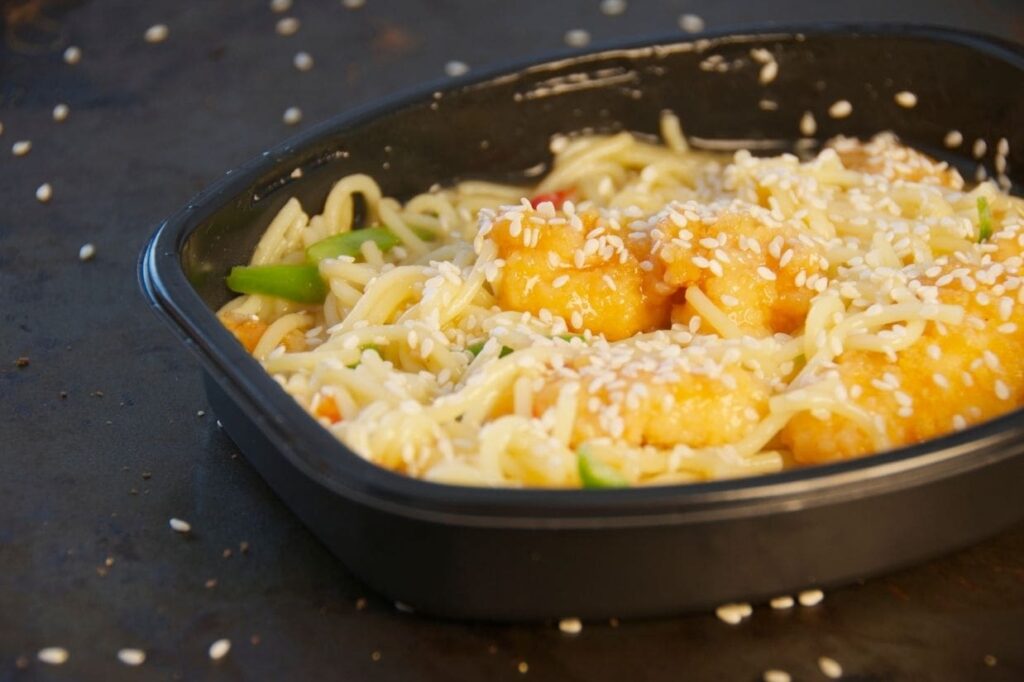
Materials for packaging ready meals or fifth-range products
At Ttpack, we know that the success of a ready meal depends on total compatibility between the tray and the film. Although there are several options available on the market, not all offer the same guarantees in terms of safety and recyclability.
Plastic is the most widely used material due to its light weight and barrier properties. However, its technical development is constantly evolving:
- Mono-materials (PP and PET): These are our main recommendation. Polypropylene (PP) and Polyethylene Terephthalate (PET) dominate the market. The simpler the packaging structure (the fewer different materials involved), the easier and more efficient the recycling process will be.
- Multi-layer solutions: For products with extreme preservation requirements, we use complex structures (such as PET/PE/EVOH/PE) that provide a complete oxygen barrier, although their recycling process is technically more demanding.
Choosing the right packaging for your ready meals is not a decision that should be made alone in front of a catalogue.
At Ttpack, we do more than provide packaging solutions; we support you through every stage of the project. We help make your production more efficient and your packaging more cost-effective.
If you would like more information about our ready meal packaging solutions, please do not hesitate to contact us. We will be delighted to assist you.