
In the flexible packaging industry, choosing between monomaterial and multilayer packaging has become a key topic. Both types of packaging serve specific functions depending on the product type, preservation requirements, and sustainability demands. With the implementation of the new European Packaging and Packaging Waste Regulation (PPWR), understanding their differences is more important than ever.
What is monomaterial packaging?
Monomaterial packaging is made primarily from a single type of polymer, such as PE, PA, PP, or PET, among others. This uniformity makes mechanical recycling easier.
In recent years, coextrusion technology has enabled monomaterial films to offer technical properties previously reserved for multilayer packaging, such as mechanical strength, sealability, and transparency, while also improving their barrier performance against oxygen and moisture.
Main advantages:
- Improved recyclability: supports the circular economy goals of the PPWR.
- Simplified waste management process.
- Lower environmental impact when combined with compatible inks and adhesives.
- Possibility of using post-consumer recycled (PCR) material.
Current limitations:
- Limited barrier against gases or ultraviolet light, especially for long shelf-life applications.
- Lower structural rigidity compared to multilayer laminates.
What is multilayer packaging?
Multilayer packaging combines different materials (such as PET, PA, EVOH, PE, PP, or aluminium) in laminated or coextruded structures. Each layer performs a specific function:
- PET or PA: mechanical strength and transparency.
- EVOH or aluminium: gas and aroma barrier.
- PE or PP: sealing capacity and thermal compatibility.
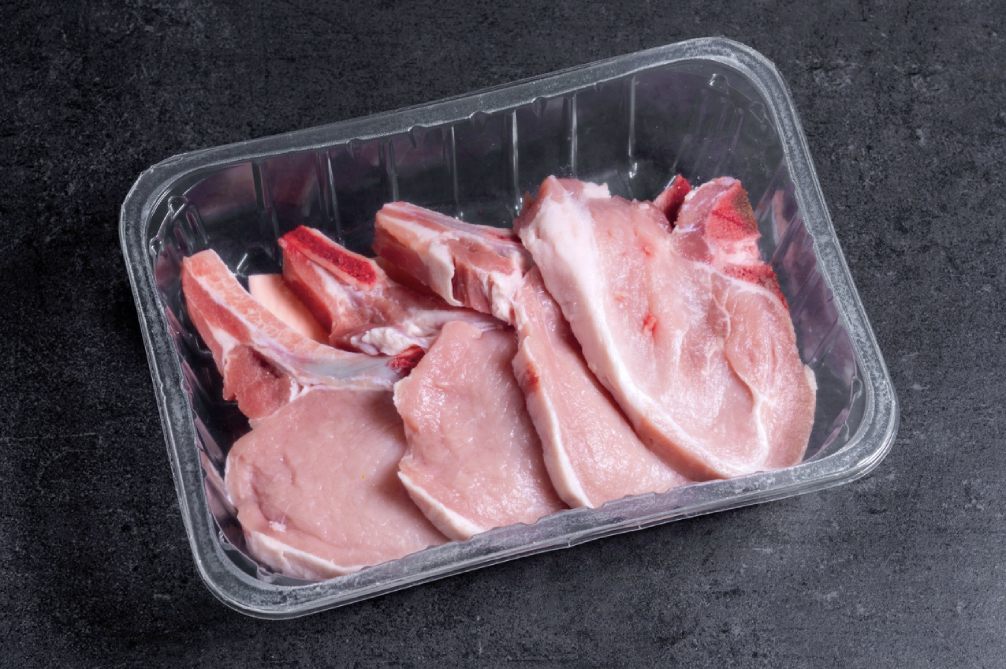
This combination allows for very high levels of protection and preservation, making multilayer packaging essential for sensitive food products such as meat, fish, cheese, ready-to-eat meals, or vacuum-packed products.
Main advantages:
- High barrier properties against oxygen, water vapour, and light.
- Greater durability and product shelf life.
- Design versatility and thermal resistance.
Current limitations:
- Difficult to recycle: polymer blends require complex separation processes.
- Higher environmental cost if waste is not properly managed.
- Lower compatibility with conventional recycling systems.
Monomaterial packaging or multilayer packaging: striking a balance between sustainability and performance
The current challenge in the sector is to reduce environmental impact without compromising product protection. For this reason, high-barrier monomaterial films are being developed, incorporating additives or thin layers of EVOH compatible with recycling. These innovations maintain the preservation quality of multilayer packaging while offering the advantage of being recyclable as a single material.
At Ttpack, we work on the development and supply of sustainable flexible structures, both monomaterial and multilayer, adapted to the technical and regulatory requirements of each client and sector. Our goal is to help you find the optimal balance between performance, protection, and sustainability.
Consult our technical team to identify the most suitable packaging solution for your product.