
Choosing the right lidding material is a key factor in the design of a heat-sealed food package. In addition to ensuring a secure seal, the material must provide the necessary product protection, adapt to the packaging line conditions and meet both shelf-life and sustainability requirements.
However, not all applications require the same performance characteristics. While some products need an additional oxygen barrier, others can perform well with simpler structures or benefit from monomaterial solutions that facilitate recyclability.
The available options include PET/PE, PET/EVOH/PE and monomaterial lidding. What are the differences between them, and when should each option be chosen?
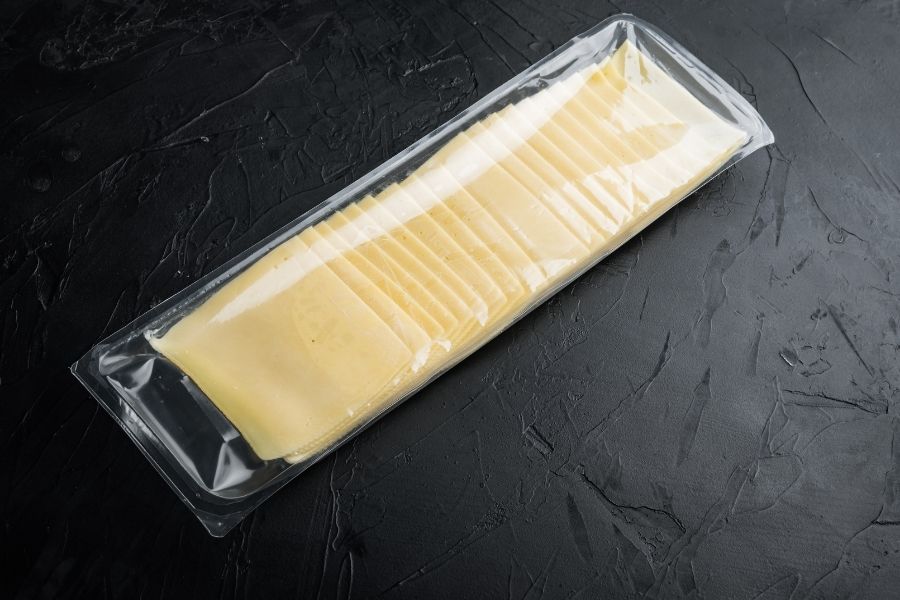
What are the differences between PET/PE, PET/EVOH/PE and monomaterial structures?
The main difference between PET/PE, PET/EVOH/PE and monomaterial structures lies in their composition and the properties they bring to the packaging.
PET/PE Lidding: a versatile solution for heat sealing
The PET/PE structure combines two materials with complementary functions. PET provides rigidity, dimensional stability and mechanical strength, while PE (polyethylene) can provide the sealing layer required to close the package, provided it is compatible with the tray material.
This combination makes it possible to develop lidding solutions suitable for a wide range of food applications requiring reliable sealing and protective properties tailored to the characteristics of the product.
When should you choose PET/PE?
- When the product does not require a high oxygen barrier.
- When a heat-sealing solution with good mechanical properties is needed.
- When the structure must be compatible with an existing packaging line.
- When the required shelf-life can be achieved with a conventional multilayer structure.
The final choice will depend on factors such as the food being packaged, its expected shelf-life, storage conditions and compatibility between the lid and the tray.
PET/EVOH/PE Lidding: when additional barrier protection is needed in heat-sealed packaging
The PET/EVOH/PE structure incorporates an EVOH (ethylene vinyl alcohol copolymer) layer, a material known for its excellent oxygen barrier properties.
This characteristic can help limit oxygen ingress into the package and contribute to preserving food quality throughout the intended shelf-life. Its effectiveness will also depend on the overall structure, layer thicknesses and conditions of use.
When should you choose PET/EVOH/PE?
- When the food product is sensitive to oxidation.
- When improved oxygen barrier properties are needed to achieve a specific shelf-life.
- When the application requires higher preservation performance than a conventional PET/PE structure can provide.
- When packaging and shelf-life tests justify the inclusion of a barrier layer.
This solution can be particularly interesting for products that require controlled oxygen exposure. However, incorporating EVOH does not, by itself, guarantee a specific shelf-life. The packaging performance must be validated using the actual product and the intended storage conditions.
Monomaterial lidding: an alternative focused on recyclability
Monomaterial solutions are designed to use a single main polymer, such as PE or PP, rather than combining different plastic families.
Their main advantage is that they can facilitate the sorting and recycling of packaging when the overall design is properly developed and compatible with the available collection and recycling systems.
For heat-sealed packaging, it is important to consider both the lid material and the tray material. A monomaterial lid does not automatically make the entire package monomaterial. Compatibility between the different components must be assessed as part of the complete packaging solution.
When should you choose monomaterial lidding?
- When recyclability is a priority in packaging design.
- When the aim is to reduce the complexity of multilayer structures.
- When the product can be adequately preserved without requiring a high oxygen barrier.
- When the lid, tray and sealing system can be designed to improve the compatibility of the complete package with recycling processes.
PE or PP monomaterial solutions can be an interesting alternative for developing more recyclable packaging. The choice between these two polymers will depend on the packaging characteristics, sealing requirements and application conditions.
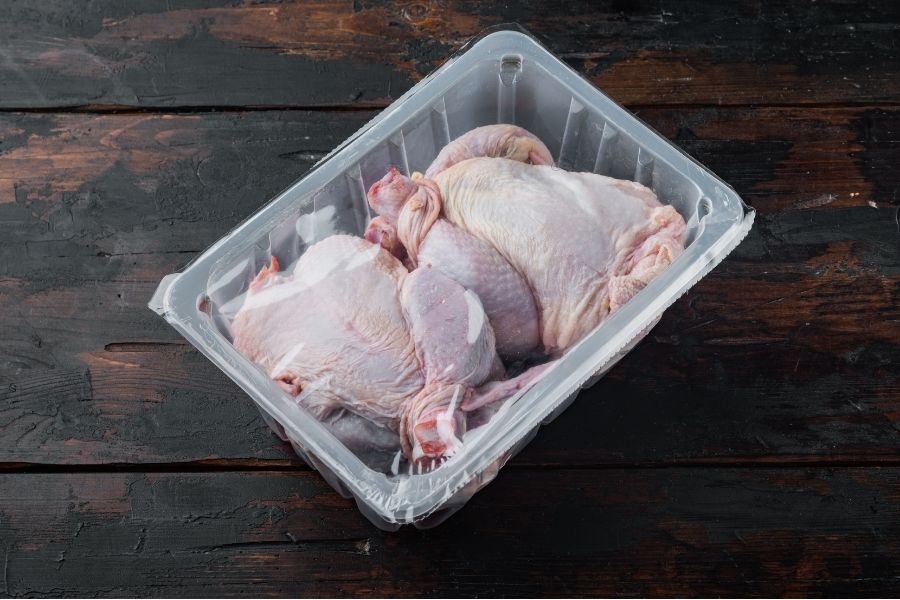
What factors should be considered before choosing a heat-sealable lid?
Material composition is important, but it should not be the only selection criterion. To identify the most suitable structure, the packaging solution should be assessed as a whole.
1. Food Preservation Requirements
Every product has specific protection requirements. Sensitivity to oxygen, moisture, light and other factors can determine which structure is most suitable. Defining the target shelf-life is a good starting point.
2. Compatibility with the Tray
The lid must be compatible with the packaging material to ensure a reliable seal. It is also important to check that the combination of materials meets the recyclability requirements established for the complete package.
3. Heat-Sealing Conditions
Temperature, pressure and sealing time all influence the final result. Therefore, it is essential to check that the material performs correctly on the production line and can achieve the required operating speed without compromising seal quality.
4. Recyclability and ecodesign requirements
Material selection should take into account both technical performance and the end-of-life of the packaging. In this respect, monomaterial solutions can offer advantages, provided that the overall design is compatible with the relevant recycling processes.
5. Applicable regulations
The European Packaging and Packaging Waste Regulation (PPWR) reinforces the importance of moving towards more sustainable packaging and improving recyclability. It is therefore advisable to assess existing structures and identify potential alternatives without compromising food safety or industrial performance.
Need help choosing the right heat-sealable lid?
Choosing the right structure means finding the right balance between food preservation requirements, heat-sealing performance and packaging recyclability objectives.
At Ttpack, we advise you on material selection and support you throughout the validation process, carrying out tests on your production line to ensure that the solution meets the technical requirements of your application.
Contact our team and find the most suitable heat-sealing solution for your product.