
Vacuum packaging is a food preservation technique that removes air from the package, creating an airtight environment that inhibits the growth of bacteria and other microorganisms.

Materials for vacuum packaging
The choice of the right material for vacuum packaging depends on several factors, such as the type of food, the preservation method, the desired shelf life, and the specific needs of the customer.
In a detailed analysis of the materials used in vacuum packaging, several options stand out, each with different characteristics and applications.
Among the most common plastics is polypropylene (PP), known for its lightness, strength, and transparency, suitable for a wide range of foods such as meats, fish, fruits, and dairy products. However, it has some permeability to oxygen and is not suitable for high-temperature cooking under vacuum.
On the other hand, polyethylene (PE) offers flexibility and good sealing properties, making it useful for fresh, frozen, and liquid foods, but it also shows oxygen permeability and has limitations for high-temperature vacuum cooking.
Similarly, polyethylene terephthalate (PET) is noted for its strength and transparency, being suitable for beverages, dry foods, and pharmaceutical products, though it lacks flexibility and is not microwave safe.
Polyamide (PA) stands out for its excellent barrier against oxygen and other gases, making it especially suitable for long-term vacuum-packed products such as cured meats and sausages. However, it is often combined with other materials to improve its flexibility and sealing, as it lacks these properties on its own.
Since each product has specific needs regarding preservation, durability, and processing, it is recommended to consult a professional specializing in packaging solutions, such as Ttpack, to select the optimal combination of materials based on the food’s characteristics and storage or cooking conditions.
Benefits of vacuum packaging
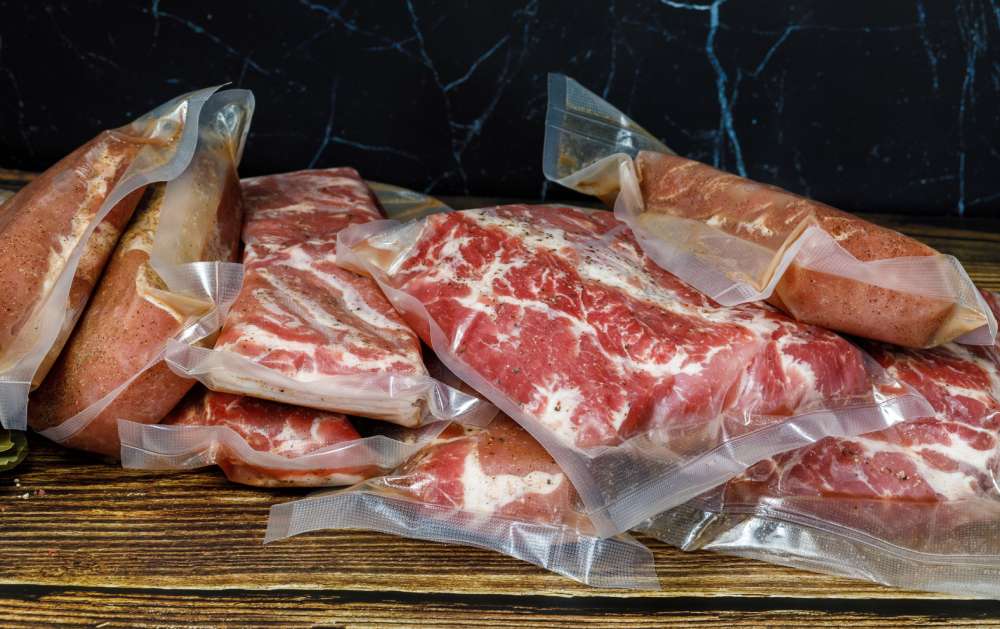
Vacuum packaging offers multiple benefits by extending the shelf life of foods by eliminating oxygen, which prevents microbial growth and fat oxidation, thus maintaining the original freshness and flavor.
Additionally, it preserves the texture and juiciness of the food by preventing dehydration and acts as a barrier against external contaminants. This type of packaging also optimizes space in refrigerators and freezers by allowing for compact and stackable packaging, facilitates food organization and visibility, and simplifies product transport and handling.

At Termoformado Termopack, we offer a wide range of materials for vacuum packaging with different properties and characteristics to meet the needs of our clients.
Here we share a blog article about thermoforming packaging and its applications, including the possibility of applying vacuum:
For more information about vacuum packaging materials and the solutions we offer, feel free to contact us.
For more information about vacuum packaging materials and the solutions we offer, feel free to contact us.