
When packaging fresh fish, choosing the right film depends not only on the strength or appearance of the packaging. Properties such as oxygen permeability also play an important role in defining a packaging solution suitable for each product.
One of the parameters used to understand this behaviour is OTR (Oxygen Transmission Rate). But what exactly does this concept mean, and what does it imply when we talk about a film with 10K OTR?
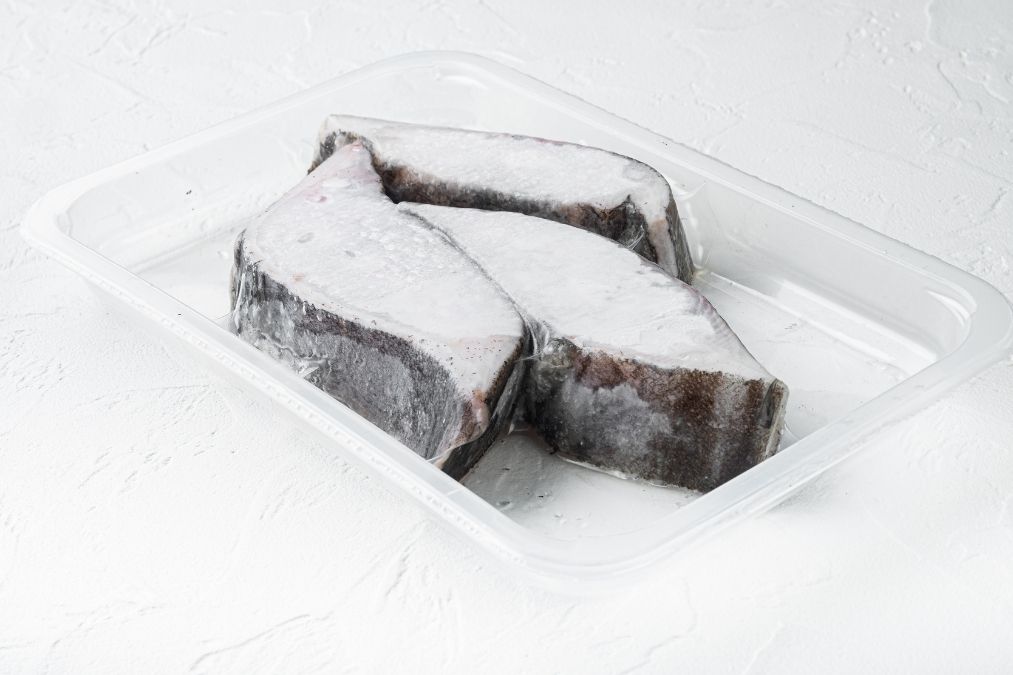
What is the OTR of a film?
OTR stands for Oxygen Transmission Rate. This parameter indicates the amount of oxygen that can pass through a packaging material over a given period and under specific test conditions.
In simple terms, OTR tells us how much oxygen can pass through the film.
This property is particularly relevant in fresh food packaging, as the balance between oxygen and other gases inside the package can influence product preservation and its behaviour throughout its shelf life.
For this reason, selecting a film with suitable permeability characteristics is an important part of designing a packaging solution.
What does 10K OTR mean in a packaging film?
When we refer to 10K OTR, we are referring to a specific oxygen transmission capacity of the material, expressed according to the conditions and units of the relevant test.
The letter K stands for one thousand. Therefore, 10K is equivalent to 10,000 units on the corresponding scale.
However, this figure should not be interpreted in isolation. The OTR value must always be assessed taking into account the measurement conditions, such as temperature, relative humidity, film thickness and test method. Two materials with the same nominal OTR value are not necessarily comparable if they have been tested under different conditions.
For this reason, in professional applications, it is important to consult the material’s technical data sheet and the conditions under which the value was obtained.
Why is OTR important in fresh fish packaging?
Fresh fish is particularly sensitive to storage conditions. During storage and distribution, maintaining suitable conditions inside the package is essential to preserve the product’s characteristics.
The film’s oxygen permeability can form part of this balance. Therefore, material selection should take into account factors such as:
- The type of fish or seafood product.
- The intended shelf life.
- The packaging system used.
- The bottom web material.
- Storage and distribution conditions.
- The product’s preservation requirements.
In other words, there is no single film that is suitable for all seafood products. The solution must be adapted to the specific characteristics of each application.
10K OTR in skin packaging solutions for the seafood industry
In Skin packaging, the top film conforms to the product and the bottom web, creating a compact package that provides an attractive presentation at the point of sale.
At Ttpack, we offer high-barrier Skin and Carton Skin solutions for the seafood industry, with different structures and bottom web options to meet the requirements of each application.
At Ttpack, we offer high-barrier Skin and Carton Skin solutions for the seafood industry, with different structures and bottom web options to meet the requirements of each application.
These solutions include 10K OTR films for fresh fish, developed for applications requiring specific oxygen permeability characteristics and compliant with FDA food safety guidelines.
In addition, Ttpack’s skin solutions offer:
- High transparency to enhance product presentation.
- Universal and peelable sealing options on PE, PET, PP and ALU.
- Bottom webs for PET/PE thermoforming, Mono PET and PP.
- Different structures adapted to product requirements and the packaging process.
Choosing the right OTR: it depends on the application
Talking about OTR does not simply mean looking for the highest or lowest value. The goal is to find permeability properties that are suitable for the product, packaging system and intended shelf life.
Therefore, before selecting a film for fresh fish, it is advisable to assess its barrier properties, bottom web material, sealing system and product characteristics together.
Material selection is part of a broader process in which all packaging components need to work together.
A Skin solution adapted to the Seafood Industry
In the seafood industry, packaging must fulfil several functions at the same time: protect the product, contribute to its preservation and provide a presentation that allows consumers to see its characteristics.
Ttpack’s Skin and Carton Skin solutions combine these requirements with different film structures and thermoforming bottom webs, allowing the solution to be adapted to each application.
Are you looking for a Skin solution for fresh fish? Explore the available options and find the structure that best meets your product’s requirements.