
The preservation of meat products presents significant challenges for the food industry. Maintaining freshness, color, flavor, and food safety throughout the product’s shelf life requires packaging solutions capable of effectively protecting against external factors. In this context, EVOH has become one of the most widely used materials in the production of high-barrier films for meat packaging.
But what exactly is EVOH, and why is it so important in this sector?
What is EVOH?
EVOH (Ethylene Vinyl Alcohol) is a thermoplastic copolymer widely used in multilayer packaging due to its excellent barrier properties against oxygen and other gases.
Its main characteristic is its ability to limit the passage of oxygen through the packaging. This is essential for products that are sensitive to oxidation, such as fresh meat, cured meats, cooked products, and ready-made meals.
On its own, EVOH provides a much higher oxygen barrier than other conventional plastic materials, making it an essential component in packaging structures designed to extend the shelf life of food products.
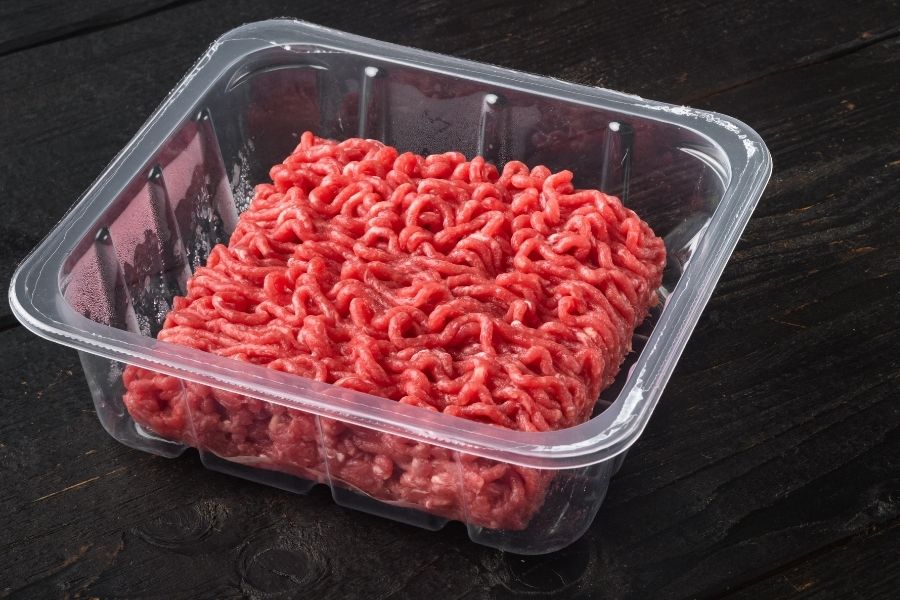
Why is oxygen an enemy of meat?
Although oxygen is essential for life, in food packaging it can become one of the main causes of product deterioration.
When meat is exposed to oxygen for prolonged periods, the following may occur:
- Color loss and changes in product appearance.
- Oxidation of fats and proteins.
- Alterations in flavor and aroma.
- Growth of aerobic microorganisms.
- Reduced shelf life.
For this reason, many meat packaging solutions incorporate high-barrier materials that hinder the entry of oxygen into the package.
The role of EVOH in meat packaging films
EVOH is not usually used as a single layer. It is typically incorporated into multilayer structures in which each material provides a specific function.
In a meat packaging film, we can find layers designed to:
- Provide mechanical strength.
- Ensure sealability.
- Offer moisture protection.
- Deliver oxygen barrier properties through an EVOH layer.
The combination of these materials makes it possible to obtain packaging that preserves product properties for longer, reducing waste and improving the consumer experience.
Advantages of EVOH in meat packaging
Longer product shelf life
By limiting oxygen ingress, EVOH helps preserve the organoleptic characteristics of meat for a longer period.
This allows for extended distribution, storage, and retail display periods.
Better color preservation
Visual appearance is one of the most important factors influencing consumer purchasing decisions.
Films containing EVOH help maintain the fresh appearance of the product, preventing premature changes associated with oxidation.
Compatibility with modified atmosphere packaging
Many meat products are packaged using Modified Atmosphere Packaging (MAP), where the air inside the package is replaced with specific gas mixtures.
For this system to be effective, materials with high gas barrier properties are essential, an area in which EVOH performs particularly well.
Reduction of food waste
Better preservation means less deterioration throughout the logistics chain and less product discarded before consumption.
This benefits manufacturers, distributors, and end consumers alike.
Is EVOH compatible with sustainable packaging?
Sustainability is currently one of the major challenges facing the packaging industry.
Traditionally, EVOH has been used in multilayer structures together with other polymers. However, technological advances have enabled the development of mono-material solutions that incorporate small amounts of EVOH while maintaining the recyclability of the packaging within certain recycling streams.
As a result, manufacturers can continue to achieve high barrier performance while moving toward circular economy models and regulatory compliance.
Common EVOH applications in meat products
Films containing EVOH are used in a wide variety of food packaging applications, including:
- Fresh meat in modified atmosphere packaging.
- Cooked meat products.
- Sliced cured meats.
- Dry-cured ham.
- Burgers and meat preparations.
- Ready-to-eat products.
In all these cases, protection against oxygen is critical to ensuring product quality and safety.
Your strategic partner in high-barrier packaging
As global suppliers of food packaging solutions, at Ttpack we do more than supply high-barrier materials; we provide a complete 360° technical service. We advise you on selecting the exact thickness and formulation for each process, whether it involves fresh products, frozen products, pasteurization, or sterilization.
In addition, our warehouses allow us to maintain permanent safety stock with immediate availability and 24-hour delivery, ensuring that your production chain never stops.
Why EVOH makes the difference in meat packaging
EVOH has established itself as one of the most important materials in modern meat packaging thanks to its outstanding oxygen barrier properties.
Its incorporation into multilayer films helps preserve the quality, color, flavor, and shelf life of meat products, while also contributing to reduced food waste and improved efficiency throughout the supply chain.