
Heat sealing has become one of the most widely used packaging methods in the meat industry thanks to its ability to provide a hermetic seal, protect the product, and maintain optimal preservation conditions throughout its shelf life. Combined with Modified Atmosphere Packaging (MAP), it helps preserve the quality of fresh meat, minimize product waste, and optimize distribution across both retail and industrial channels.
However, packaging performance does not depend solely on the heat sealing machine or the gas mixture used. Film selection, material structure, compatibility between the lidding film and the tray, and barrier properties are all critical factors in achieving a reliable seal and maintaining a stable modified atmosphere.
In this article, we examine the materials most commonly used in heat-sealed meat packaging, the characteristics a high-performance film should offer, and how to select the most suitable structure for each application.
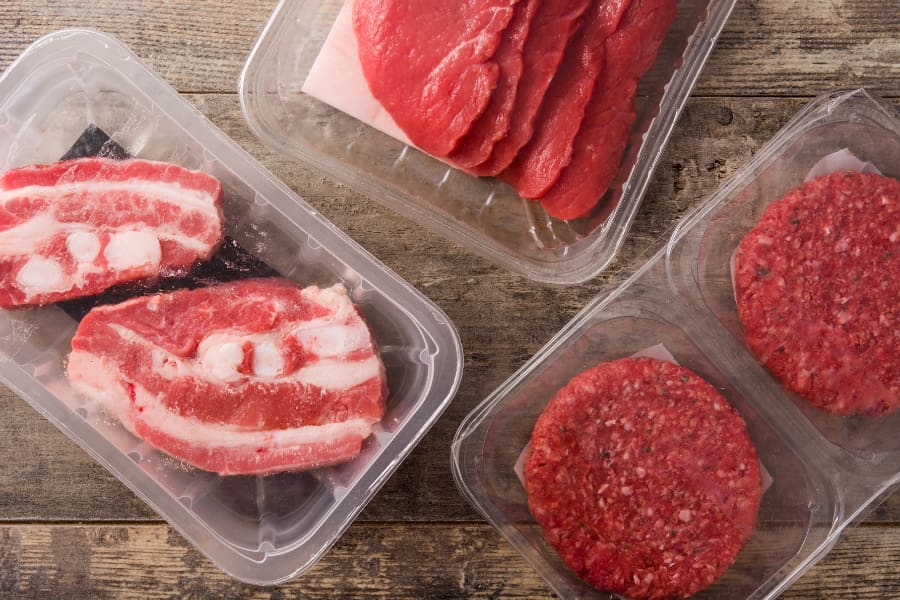
What is heat sealing in meat packaging?
Heat sealing is a process in which a flexible film, or LID film, is bonded to a tray by applying controlled heat, pressure, and time. The objective is to achieve a completely hermetic seal that protects the product from external contamination and prevents unwanted gas exchange with the surrounding environment.
In the meat industry, this process is primarily used in combination with Modified Atmosphere Packaging (MAP). Before sealing, the air inside the package is replaced with a specific gas mixture designed to slow microbial growth and preserve the organoleptic properties of fresh meat for longer.
To ensure that this modified atmosphere remains stable throughout the product’s shelf life, the seal must be uniform, and the packaging structure must provide the appropriate barrier against oxygen and other gases. A perfect seal on an unsuitable material, or an excellent material with poor sealing performance, will equally compromise food preservation.
Common materials and structures for heat-sealed meat packaging
There is no single structure suitable for every application. Each product has specific requirements in terms of barrier performance, mechanical strength, and packaging process performance.
Among the most commonly used structures are:
PET/EVOH/PE
This is one of the most widely used structures for high-barrier fresh meat applications. It combines excellent transparency for product presentation with high oxygen barrier performance and outstanding performance on automatic heat sealing lines.
PA/EVOH/PE
The addition of polyamide improves mechanical strength and puncture resistance, making this structure particularly suitable for bone-in cuts or products with shapes that place greater stress on the packaging.
MonoPET
MonoPET-based structures support the transition toward packaging solutions designed to improve recyclability while maintaining high technical performance in selected applications.
PP/EVOH/PP
Structures primarily based on polypropylene provide excellent rigidity, dimensional stability, and heat resistance. They are especially suitable when the product requires post-packaging processes such as pasteurization or specific heating applications.
PE/EVOH/PE
When greater flexibility or impact resistance is required, polyethylene-based structures provide a widely used alternative. They also offer excellent puncture resistance and can be adapted to different packaging formats.
The selection of one structure over another should always take the entire packaging process into account, not just the material itself.
How to choose the right film for your application
Material selection should always begin with the actual requirements of the product.
For fresh meat intended for supermarket shelves, the main priorities are typically high transparency, attractive product presentation, and a high oxygen barrier capable of maintaining the modified atmosphere throughout the intended shelf life.
For industrial cuts or large meat portions, greater importance is placed on mechanical strength, transport performance, and seal stability.
For products containing bones or sharp elements, increased puncture resistance is essential to reduce the risk of accidental perforation.
Potential post-packaging processes such as freezing, pasteurization, or sterilization should also be considered, as each requires materials with specific temperature resistance characteristics.
Key characteristics of a heat sealing film
In addition to providing a hermetic bond between the lidding film and the tray, a film for meat packaging applications must meet the specific requirements of each production process.
Typical performance characteristics include:
- High oxygen barrier through EVOH-based structures.
- Excellent sealing performance on automatic packaging lines.
- Anti-fog properties to enhance product presentation.
- High puncture resistance.
- Peelable opening when required by the application.
- Compatibility with freezing processes.
- Suitability for cooking, pasteurization, or sterilization depending on the selected structure.
- UV protection for specific applications.
- High-quality printability to reinforce product branding.
- Solutions designed to improve recyclability, including structures primarily based on PP, PE, or MonoPET.
The ideal combination of these characteristics will always depend on the product, the production process, and the manufacturer’s objectives.
The shift towards structures designed for recyclability
The growing demand for more sustainable packaging is driving the development of structures that facilitate sorting within existing recycling streams.
Among these are structures primarily based on PP or PE that incorporate functional EVOH barrier layers to maintain the barrier performance required for MAP applications.
These solutions aim to balance food preservation, industrial performance, and design for recyclability while complying with the technical requirements of each application and current recyclability guidelines.
The transition to these structures should always be assessed on a case-by-case basis, considering factors such as product shelf life, compatibility with the heat sealing line, and logistical requirements.
How to validate a new packaging material before implementation
Replacing a packaging material should never be based solely on its technical specifications.
Before implementing a new structure, industrial trials should be carried out to verify its performance under real production conditions.
These validation tests typically include compatibility testing between the lidding film and the tray, optimisation of the sealing window (temperature, pressure, and dwell time), seal integrity testing, residual oxygen measurement, and evaluation of the seal’s mechanical strength.
Only through this validation process is it possible to ensure that changing materials will not negatively affect production line performance or the final package quality.
Find the most suitable heat sealing solution for your application
Every meat product has different preservation, mechanical strength, and packaging performance requirements. For this reason, film selection should not be based solely on the material itself, but on achieving the right balance between structure, barrier properties, tray compatibility, and production process requirements.
At Ttpack, we offer a comprehensive range of heat sealing films, LID films, and high-barrier structures for Modified Atmosphere Packaging (MAP), including both conventional solutions and options designed to improve recyclability.
Discover our heat sealing packaging solutions for the meat industry >>>>>>>
Our technical team will help you select the most suitable material structure and carry out validation trials to ensure optimal performance on your production line before implementation.